Skip to the page
Molecule & Menu

Why food works, and what dinner used to be.

Roast & Steep

How coffee and tea are processed, roasted, decaffeinated and extracted, and what each step changes chemically, plus the record behind their names; no botany, origin legends, health claims or brewing-gear reviews.

4 pages; the first card is the place to start

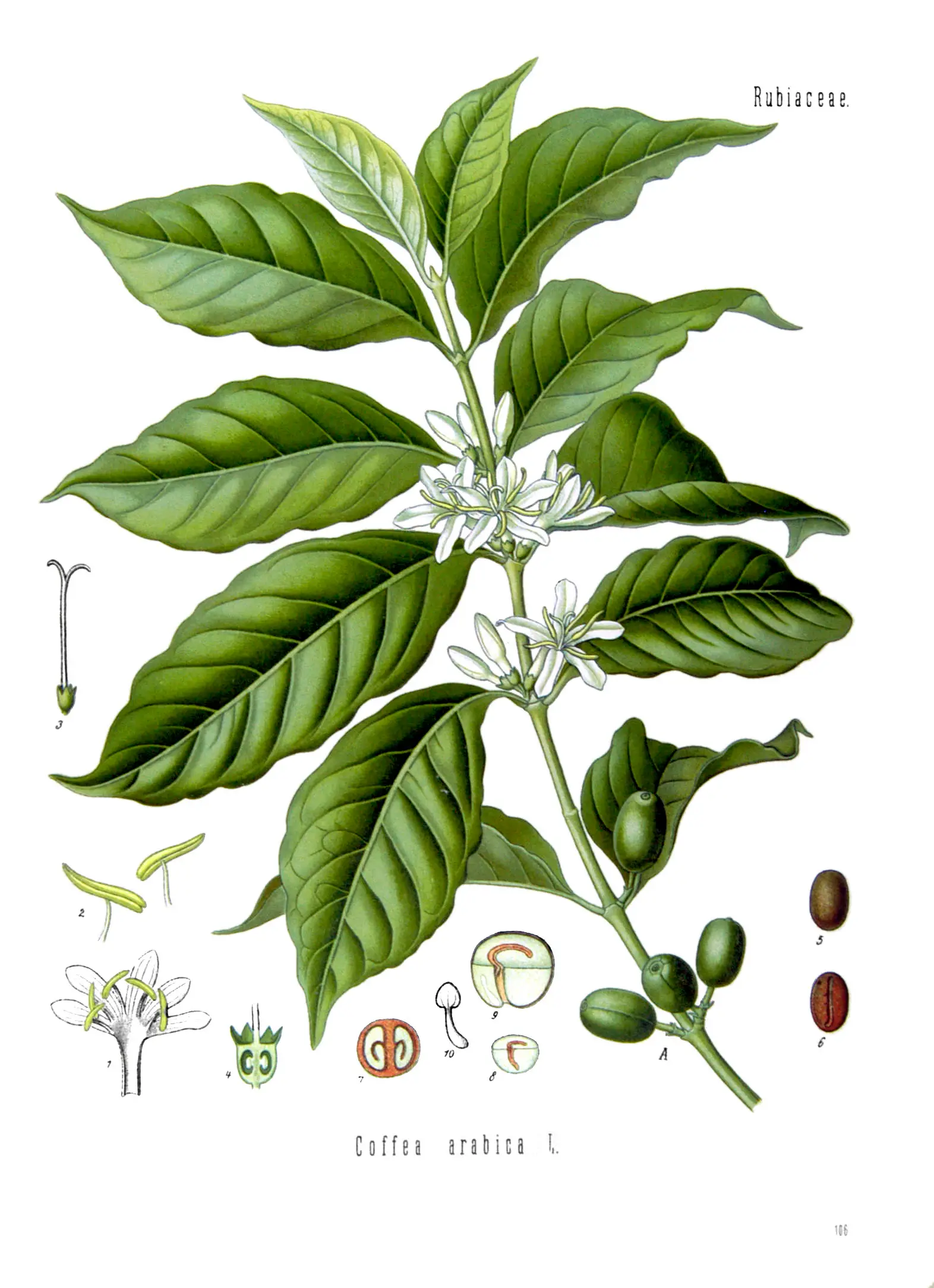
Botanical plate of Coffea arabica: a branch with white flowers and green fruit, with a cut fruit and two seeds beside it

Roast & Steep

Coffee Processing: Washed Coffee Is Fermented, Too

Washed coffee sits in closed containers for 12 to 72 hours in one 2024 review's figures. How washed, natural and honey processing differ, layer by layer.

Picture credit

"Coffea arabica, plate 106 of Köhler's Medizinal-Pflanzen" by Franz Eugen Köhler, Köhler's Medizinal-Pflanzen — https://commons.wikimedia.org/wiki/File:Coffea_arabica_-_K%C3%B6hler%E2%80%93s_Medizinal-Pflanzen-189.jpg — Public domain (Public domain in the US (Köhler's Medizinal-Pflanzen, published in Germany in 1887-1898, before 1931) and in the EU (Commons tags the plate PD-old, life plus 70 years, and marks it with the Public Domain Mark; this basis rests on those two tags and the 1887-1898 publication, not on any artist's or editor's death year))
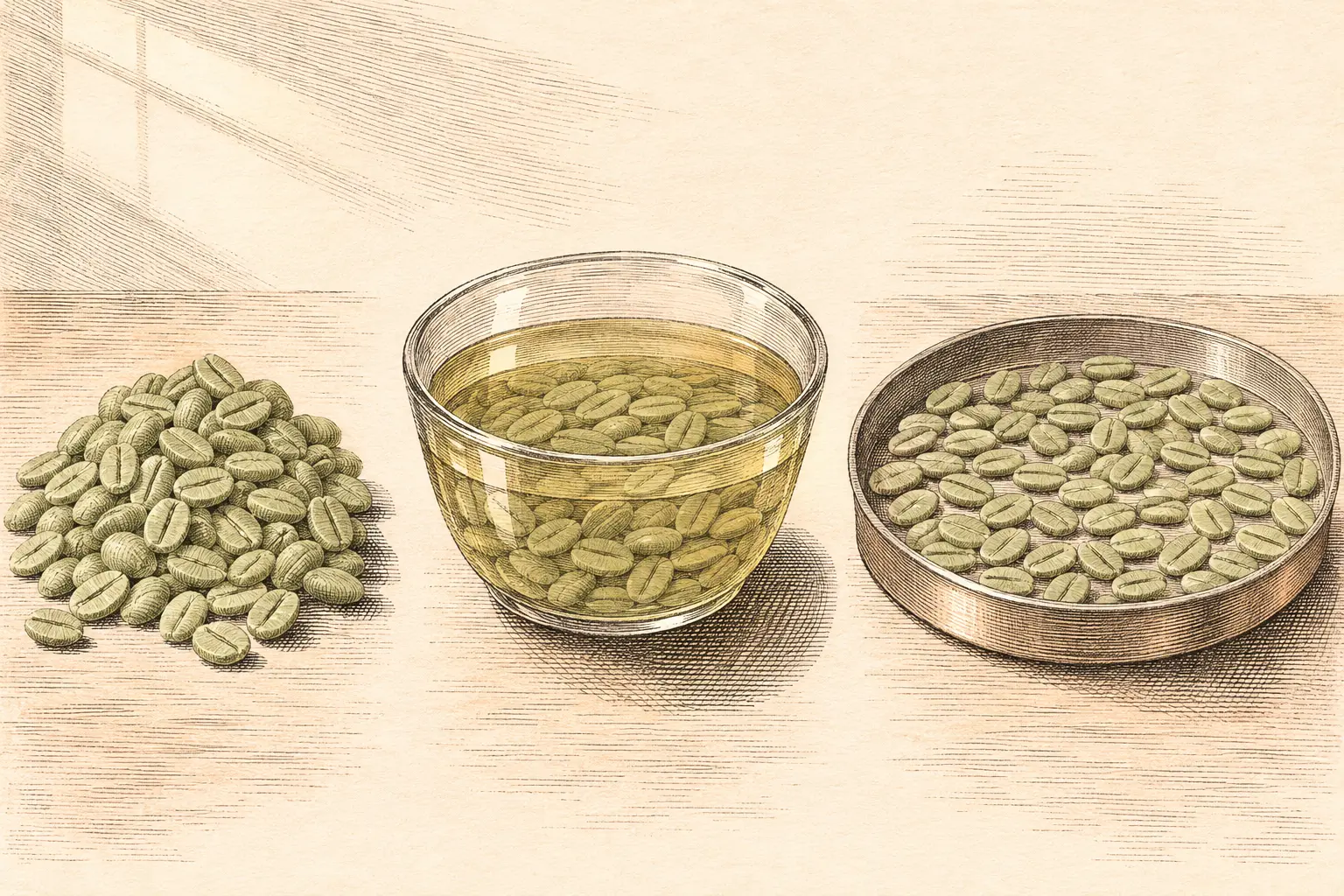
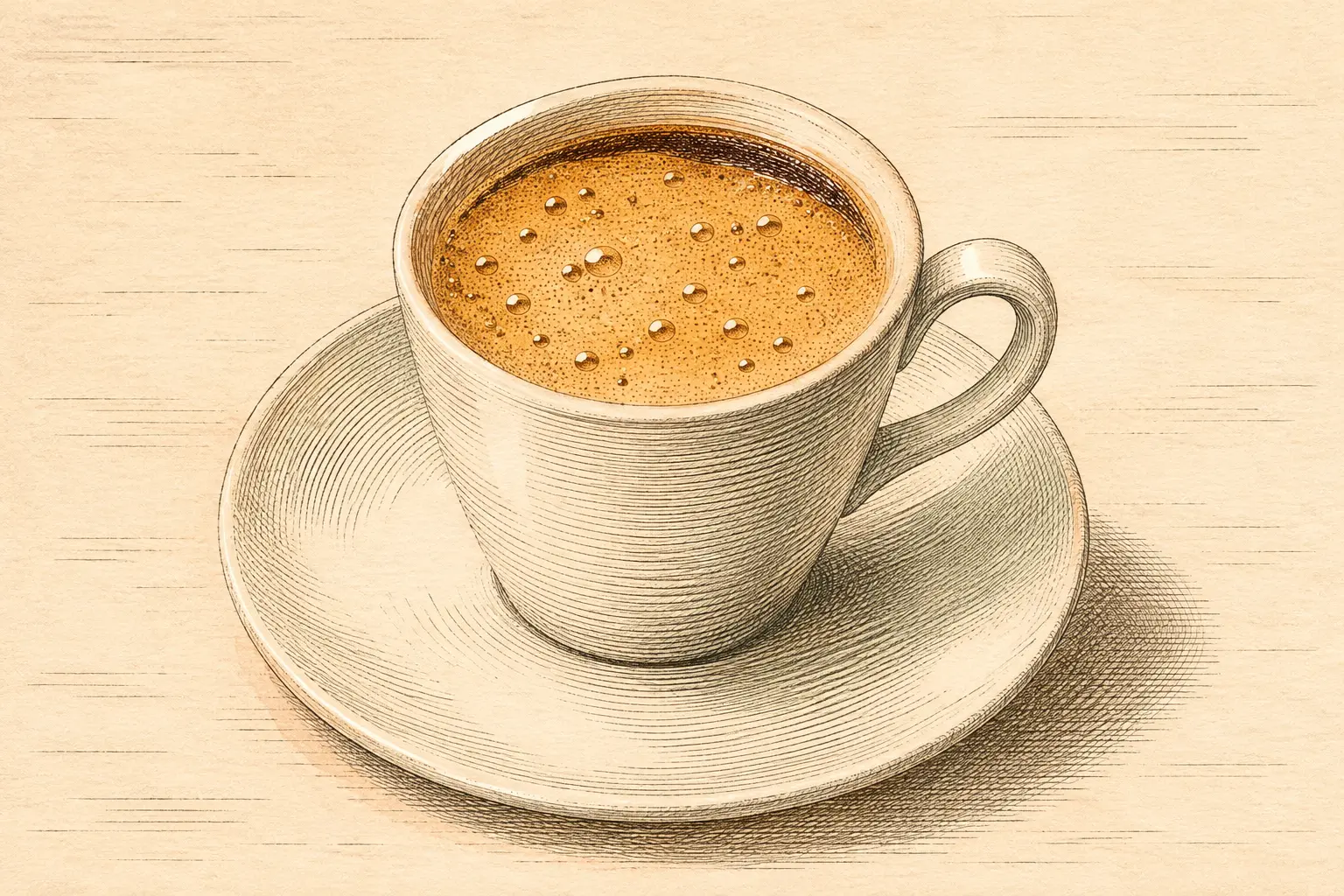
Illustration: green coffee beans in three steps, piled, soaking in a pale liquid, then spread out to dry

Roast & Steep

Swiss Water Process: Decaf Is Made Before the Roast

Decaf loses its caffeine as a green bean, before roasting. How the Swiss Water process and solvent and CO2 methods work, per two 2025 papers.

Picture credit (illustration)

Illustration: Molecule & Menu. Generated schematic illustration — not a photograph or historical record. Reuse: CC BY 4.0 (https://creativecommons.org/licenses/by/4.0/), to the extent Molecule & Menu holds rights in this image.

Illustration: a cup of espresso seen from above, covered by a tan foam of fine bubbles

Roast & Steep

Espresso Crema: The Foam Comes From Gas Made in Roasting

Espresso crema is a foam whose bubbles hold mainly CO2 from the roast. How brewing pressure forces that gas into the water, per a 2021 review, and why it fades.

Picture credit (illustration)

Illustration: Molecule & Menu. Generated schematic illustration — not a photograph or historical record. Reuse: CC BY 4.0 (https://creativecommons.org/licenses/by/4.0/), to the extent Molecule & Menu holds rights in this image.

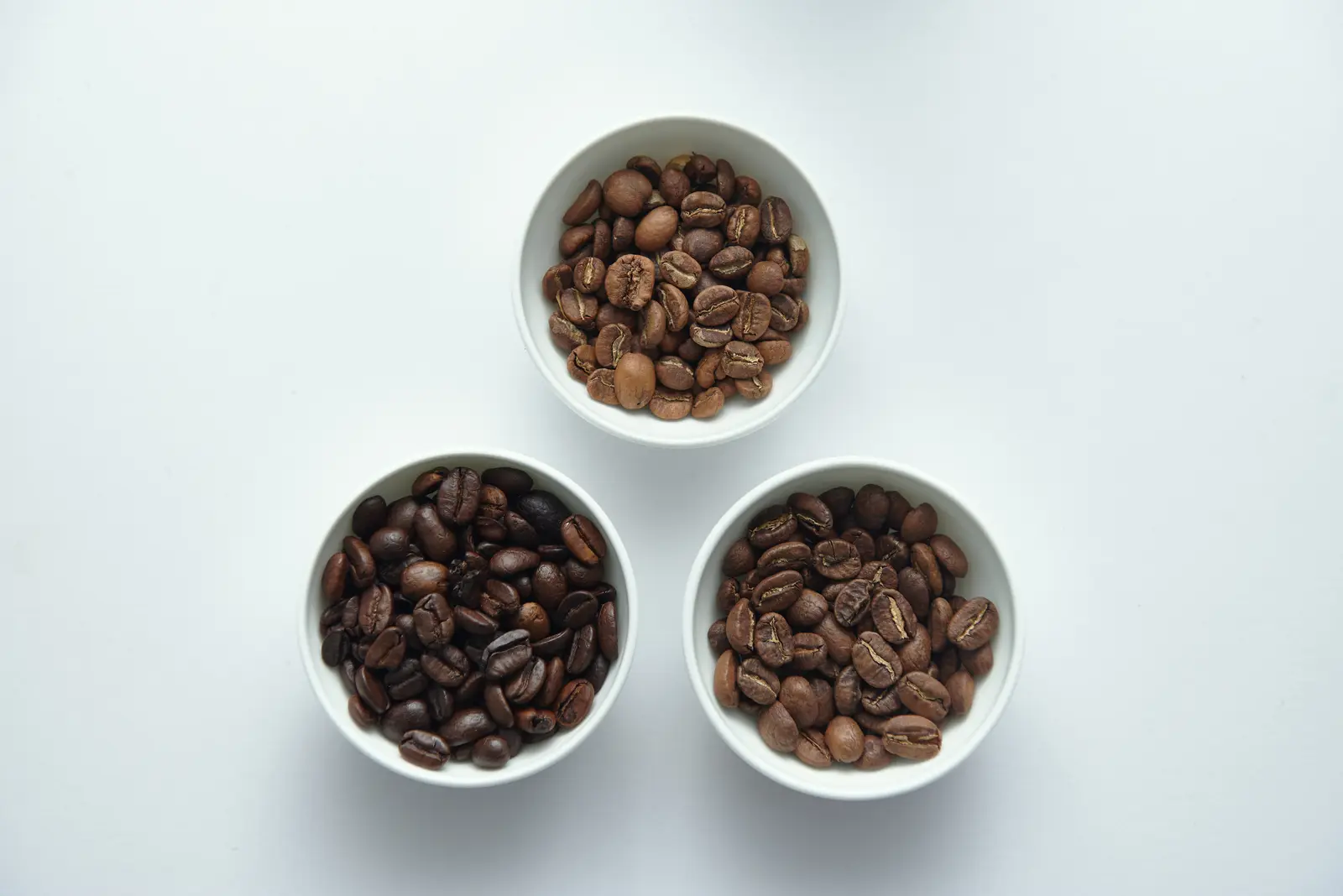
Three white bowls of coffee beans seen from above, roasted to three different degrees, from light brown to dark brown

Roast & Steep

Pyrazines: Roasting Builds Part of Coffee’s Roasty Smell

Pyrazines form as coffee roasts. One, 2,3,5-trimethylpyrazine, is put at 1 to 6.7 mg/kg in coffee and about 50 ng per liter of air to smell, per earlier work.

Picture credit

"15 grams of coffee roasted to different degrees" by Alorin — https://commons.wikimedia.org/wiki/File:15_grams_of_coffee_roasted_to_different_degrees.jpg — CC BY 4.0 (https://creativecommons.org/licenses/by/4.0/)