Skip to the page
Molecule & Menu

Why food works, and what dinner used to be.

Flavor Chemistry

Flavor and aroma molecules in everyday food, each tied to a researched sensory fact such as a receptor, a smell gene, handedness or a detection threshold; no molecule sizes, drugs, doses or health claims.

5 pages; the first card is the place to start

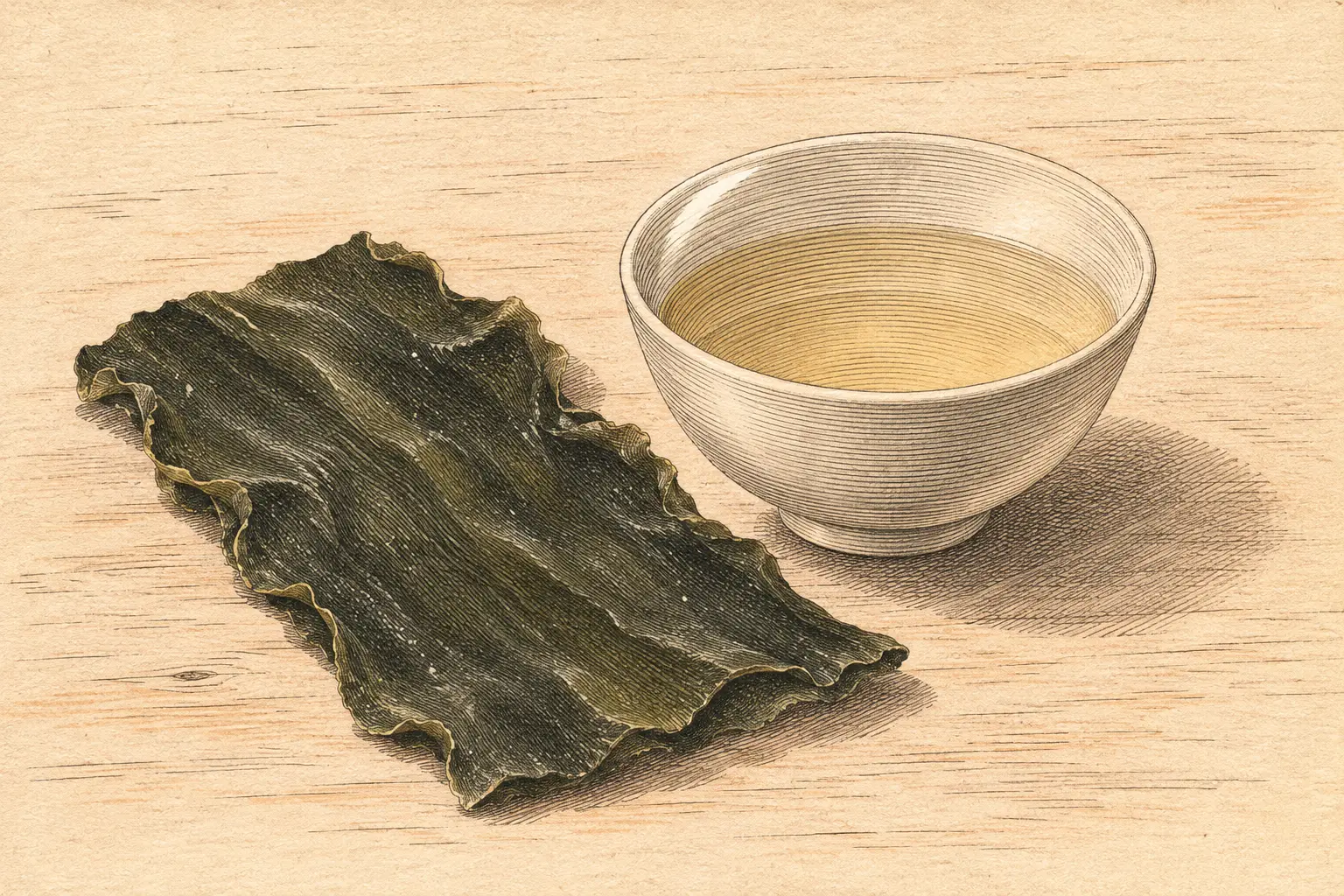
Illustration: a sheet of dark dried kombu beside a bowl of pale, clear broth

Flavor Chemistry

Umami: Glutamate’s Savory Taste, From Kombu Broth to MSG

Umami is the savory taste of glutamate, which Kikunae Ikeda drew from a seaweed broth. The FDA never confirmed MSG caused reported symptoms; see the evidence.

Picture credit (illustration)

Illustration: Molecule & Menu. Generated schematic illustration — not a photograph or historical record. Reuse: CC BY 4.0 (https://creativecommons.org/licenses/by/4.0/), to the extent Molecule & Menu holds rights in this image.
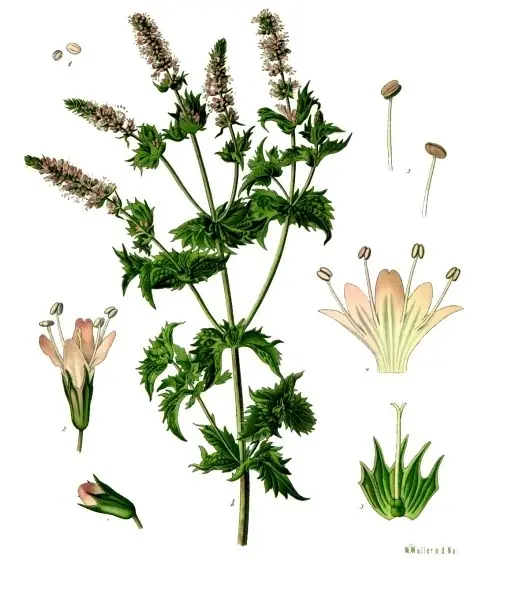
Botanical plate of spearmint: a flowering stem with toothed leaves and pale pink flower spikes, with enlarged flower parts

Flavor Chemistry

Carvone: Mirror-Image Molecules Some Noses Can’t Tell Apart

Carvone has two mirror-image forms, linked mainly to spearmint and caraway. In a 2019 study, 12 of 46 volunteers screened could not tell them apart at first.

Picture credit

"Mentha viridis (spearmint), Köhler’s Medizinal-Pflanzen" by Franz Eugen Köhler, Köhler's Medizinal-Pflanzen — https://commons.wikimedia.org/wiki/File:Mentha_viridis_-_K%C3%B6hler%E2%80%93s_Medizinal-Pflanzen-096.jpg — Public domain (Public domain in the US (Köhler's Medizinal-Pflanzen, published in Germany in 1887-1898, this plate in 1897, before 1931; the plate is signed W. Müller) and in the EU (Commons tags the plate PD-old, life plus 70 years, and marks it with the Public Domain Mark; this basis rests on those two tags and the 1887-1898 publication, not on any artist's or editor's death year))

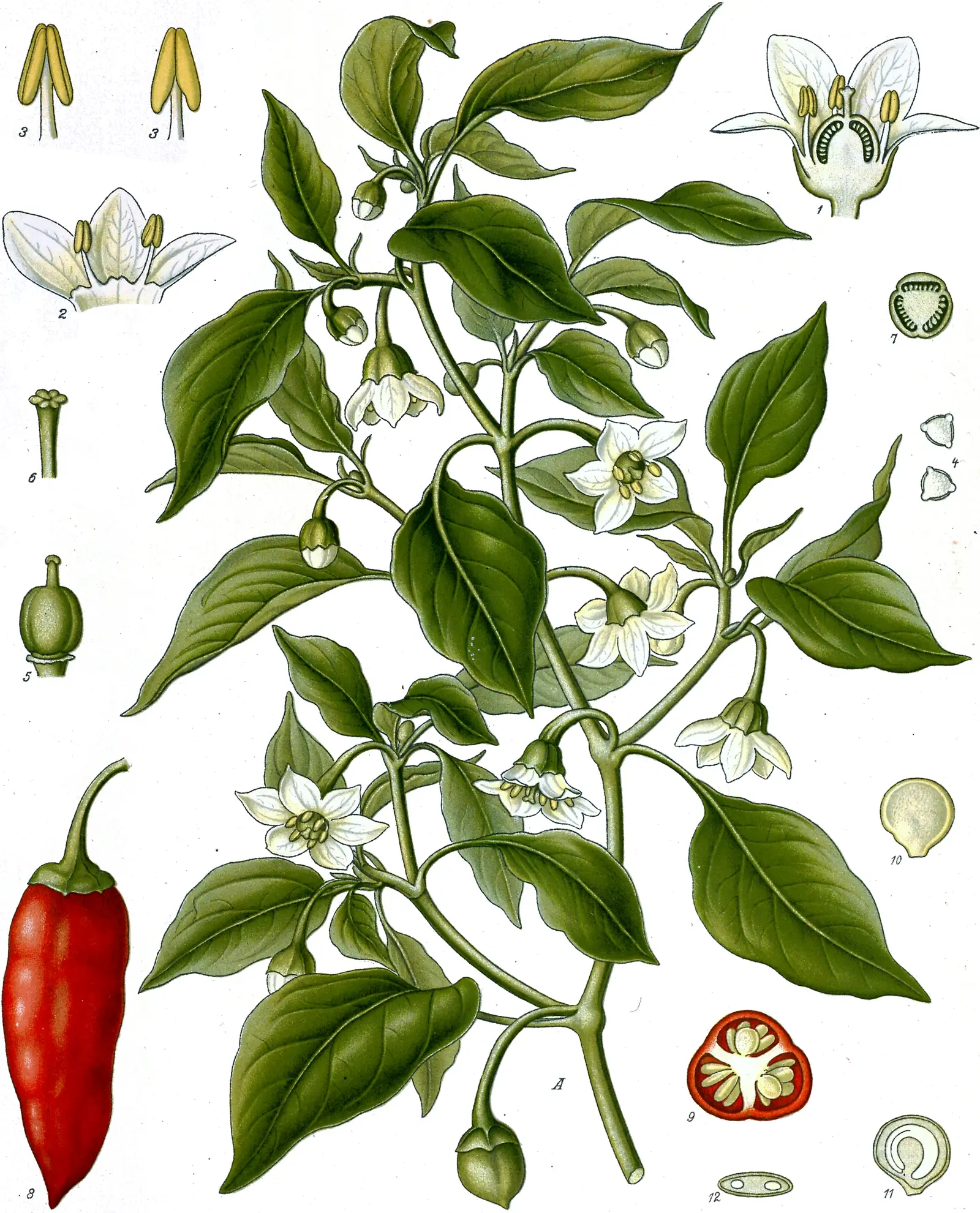
Botanical plate of a chili plant with white flowers, a long red pod and the pod cut in cross-section

Flavor Chemistry

Scoville Scale: Diluted Until the Tongue Felt a Weak Bite

Scoville’s 1912 test diluted chili extract in sweetened water to a distinct but weak bite. A 2026 review reports labs multiplying capsaicin ppm by 15 to 16.1.

Picture credit

"Capsicum annuum (Spanischer Pfeffer), Köhler’s Medizinal-Pflanzen" by Franz Eugen Köhler, Köhler's Medizinal-Pflanzen — https://commons.wikimedia.org/wiki/File:Capsicum_annuum_-_K%C3%B6hler%E2%80%93s_Medizinal-Pflanzen-027.jpg — Public domain (Public domain in the US (Köhler's Medizinal-Pflanzen, published in Germany in 1887-1898, this plate in 1897, before 1931) and in the EU (Commons tags the plate PD-old, life plus 70 years, and marks it with the Public Domain Mark; this basis rests on those two tags and the 1887-1898 publication, not on any artist's or editor's death year))

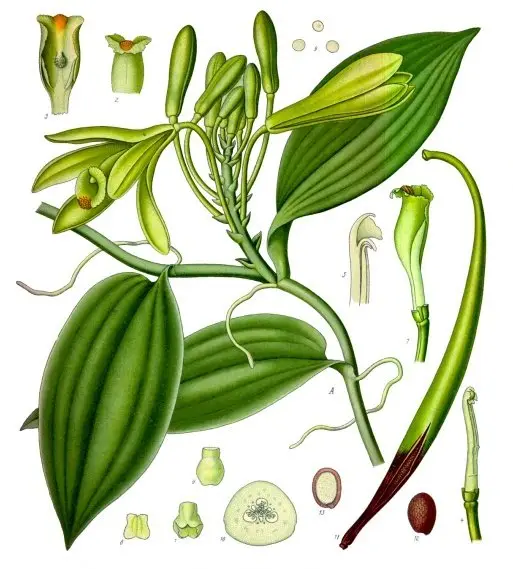
Botanical plate of a vanilla orchid stem with pale green flowers, broad leaves and a long green pod

Flavor Chemistry

Vanillin: One Review Puts the Synthetic Share at 88%

Most vanillin is synthetic: a 2024 review puts it at 88% of the market, plant-based at 11.5% and vanilla pods at 1.5%. Carbon isotopes can hint at the source.

Picture credit

"Vanilla planifolia (Echte Vanille), Köhler's Medizinal-Pflanzen" by Franz Eugen Köhler, Köhler's Medizinal-Pflanzen — https://commons.wikimedia.org/wiki/File:Vanilla_planifolia_-_K%C3%B6hler%E2%80%93s_Medizinal-Pflanzen-278.jpg — Public domain (Public domain in the US (Köhler's Medizinal-Pflanzen, published in Germany in 1887-1898, this plate in 1897, before 1931) and in the EU (Commons tags the plate PD-old, life plus 70 years, and marks it with the Public Domain Mark; this basis rests on those two tags and the 1887-1898 publication, not on any artist's or editor's death year))

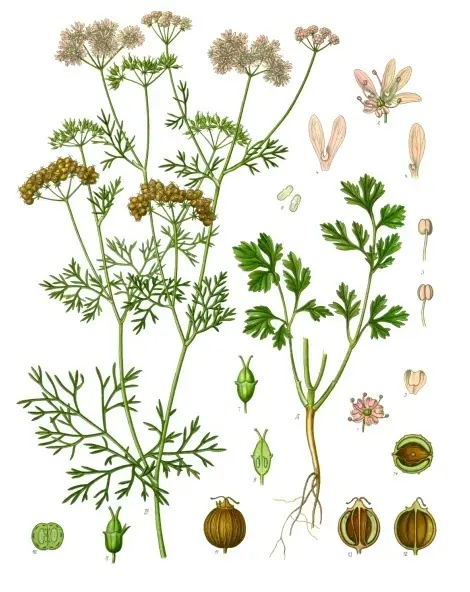
Botanical plate of coriander: a young plant with broad leaves and a tall stem with feathery leaves, flowers and fruits

Flavor Chemistry

Why Does Cilantro Taste Like Soap? Aldehydes and Some Genes

Cilantro’s soapy note is tied to aldehydes and to a variant near smell-receptor genes, but a 2012 study put heritability from common SNPs at only about 0.087.

Picture credit

"Coriandrum sativum (Echter Koriander), Köhler’s Medizinal-Pflanzen" by Franz Eugen Köhler, Köhler's Medizinal-Pflanzen — https://commons.wikimedia.org/wiki/File:Coriandrum_sativum_-_K%C3%B6hler%E2%80%93s_Medizinal-Pflanzen-193.jpg — Public domain (Public domain in the US (Köhler's Medizinal-Pflanzen, published in Germany in 1887-1898, this plate in 1897, before 1931) and in the EU (Commons tags the plate PD-old, life plus 70 years, and marks it with the Public Domain Mark; this basis rests on those two tags and the 1887-1898 publication, not on any artist's or editor's death year))